

Progressive jackpots build from wager contributions, while the base game has a separate payout profile and trigger rules can vary.
Where the Jackpot Comes From—and What It Can Cost the Base Game
A progressive jackpot grows as contributions are added to its pool. In a progressive jackpot slot, part of each wager is allocated to that pool rather than remaining in the game’s ordinary payout structure. The displayed jackpot can therefore increase as play continues, while the slot’s base game—the spins and prizes outside the jackpot—has a separate return profile.
The contribution is not the same as a separate charge added on top of your stake. It is a portion of the wager. Across connected machines playing the same progressive game, those portions accumulate in the jackpot pool. That is the mechanism behind a prize that can grow beyond the amounts paid by one machine’s players alone. It also means that the pool is funded through play, not by a guaranteed extra payment from the casino.
Progressive jackpot slots typically direct between 1% and 3% of each wager to the pool. The amount contributed from an individual spin depends on its stake: a smaller wager sends a smaller amount, while a larger one sends more, at the applicable contribution rate. This is relevant if you are looking at progressive penny slots in the UK. A low stake does not make the contribution disappear, but it does affect how much that wager adds in cash terms. It does not, by itself, tell you how likely the jackpot is to be won.
The trade-off can show up in the base game’s return. Progressive slots often have a base-game RTP in the 88%–92% range, with the difference in payout directed towards the jackpot pool. RTP is a theoretical measure of return across extensive play, not a promise about what your own sessions will return. The base-game figure also does not mean that every player will receive that share of their stake back, or that a jackpot win will make up the difference for a particular person.
Classic Slots Online UK: How Wins Work
This distinction matters when comparing progressive slots with games that do not have a growing jackpot. The headline prize can be substantial, but it is only one part of the game’s payout structure. The base game may return less than you expect if you focus only on its ordinary spins and ignore the portion assigned to the progressive pool. Conversely, a lower base-game RTP does not describe the size of the jackpot or establish what you will get back. These are different elements of the same design.
When you assess an online progressive slot in the UK, look for the game’s information on RTP and jackpot contribution rather than relying on the prize display alone. A large or rising figure tells you how much is currently shown in the pool; it does not tell you how the base game performs. If the contribution and RTP are stated separately, read both. If you cannot find them in the game information, you do not have enough detail to make a direct comparison on those measures.
It is also worth keeping the contribution rate in proportion. A percentage taken from each wager may sound small, but it applies repeatedly as you play. The amount added to the pool and the amount available for ordinary game payouts are connected parts of the same structure. That does not mean the progressive format is automatically poor value, nor that a regular slot is automatically preferable. It means that the prize feature has a cost within the game’s overall return design, and the base-game RTP helps make that trade-off visible.
This is why the phrase “best progressive slots” cannot be judged by jackpot size alone. A jackpot figure may attract attention, but it does not show the base-game return or the share of wagers feeding the pool. For a fairer comparison, consider the game’s stated contribution and RTP together, and decide whether the potential jackpot is worth the lower ordinary-game return described by those figures. Neither number predicts an individual result.
Progressive slots online in the UK use this basic funding idea: wagers contribute to a pool, and the base game can have a lower RTP as part of that arrangement. Understanding the split gives you a clearer basis for deciding whether the format suits your budget and expectations. The jackpot is not free money sitting apart from the game; it is funded through play, while the ordinary payouts reflect the other side of the same design.
Typical Progressive Slot Metrics
Progressive slots typically direct 1% to 3% of each wager to the jackpot pool, with base-game RTP generally ranging between 88% and 92%.
Shared Jackpots, Game Availability and Getting Paid
A progressive jackpot can be linked across several operators rather than belonging to a single casino. When those operators carry the same progressive slot, wagers on connected versions feed a shared jackpot pool. The prize is therefore not necessarily limited to play taking place on the site where you happen to be spinning.
That shared structure does not mean every casino offers the game. The operator must carry it, and availability can change as providers update their catalogues. A specialist review reports that the same progressive slot may be listed by some operators and absent from others; treat that as a reason to check the live games catalogue, not as a permanent list. A title described as new may also be added or removed as a provider’s offering changes.
If you find the same game at more than one operator, check the game’s information and the operator’s terms to understand how its jackpot is presented and what applies to a win. The network pool may be shared, while account records, verification and withdrawal arrangements are handled through the operator where you played. A shared prize does not make those practical steps identical across sites.
Searches for video slots with progressive jackpots, or for a list of available games, can turn up titles that are not currently offered at the casino you use. Rather than relying on a ranking or an old list, open the operator’s catalogue and confirm that the game is playable there. The same applies if you are looking for a particular payment method, such as Bitcoin: the currency or payment option does not establish that a specific progressive slot is available, or that its jackpot is shared. Check the operator’s current payment and game terms before depositing.
Elk Studios Casinos in the UK: Availability Guide
What happens after a large win
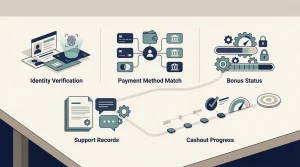
A jackpot win may not be paid in the same way as an ordinary withdrawal. A large claim can require additional verification, and a specialist review reports that some progressive jackpot prizes may be paid in structured instalments over several years. These are possibilities to clarify before playing, not conditions to assume will apply to every game or every win.
Read the game and operator terms for the process used to confirm a jackpot, the documents that may be requested and whether payment can be split over time. If the terms do not make the arrangements clear, ask the operator before staking money. Keep copies of relevant messages and account records if you do need to make a claim. Those steps help you understand what the operator requires; they do not change the jackpot or guarantee a particular payment schedule.
Verification can also mean that the time from a win to receiving funds is not simply the time shown for a routine cash-out. A specialist review gives indicative withdrawal timings of one to three working days for debit cards, hours for e-wallets, and three to five working days or longer for bank transfers. These are reported timings, not promises: the payment method available to you, the operator’s process and any additional checks can affect how long a withdrawal takes. Check the current cashier information and terms rather than treating a general estimate as a deadline.
Payment Terms
Large jackpot prizes may be paid in structured instalments over several years rather than as a single immediate transfer.
A useful distinction is between confirming the win and transferring the money. The operator may need to establish that the account and play meet the relevant requirements before arranging payment. If a prize is to be paid in instalments, the schedule matters as much as the headline jackpot amount: make sure you understand when payments are due and what the terms say about them. Do not assume that a displayed total will arrive as one immediate transfer.
For a practical comparison between casinos, look beyond whether a game appears in a catalogue. Confirm that it is the same progressive slot, read the jackpot and withdrawal terms, and check which payment methods the operator supports. If a game has disappeared or its details have changed, the operator’s current information is more useful than an older listing. Availability, shared-pool participation and the route by which a prize is paid are related, but they are separate things to verify.
How Progressive Jackpot Triggers Work
A progressive jackpot does not have one universal trigger. In some games, the prize can be awarded through a random event; in others, you need a particular symbol combination or must enter a bonus round. The game’s rules determine which applies, so the jackpot label alone does not tell you what has to happen.
With a random trigger, the jackpot event is not tied to landing a stated combination. That does not mean every spin has the same outcome or that a win is due after a run without one. It means the game describes the jackpot as capable of triggering at random rather than requiring a named sequence of symbols or a particular bonus entry. The exact trigger conditions should be set out in the game information.
Online Craps Casinos UK: Checks Before Depositing
A combination-based jackpot works differently. Here, the rules identify a specific result that qualifies for the prize. A bonus-round jackpot depends on reaching the relevant feature; entering a bonus round is not, by itself, proof that the jackpot has been won. Check whether the jackpot is awarded for entering the feature or only for a further event within it. Those details vary by game, and it is better to read the rules than infer them from the game’s name or artwork.
Check which event qualifies
Before playing, look for the jackpot rules in the game’s information panel or paytable. Check whether the trigger is random, linked to a symbol combination, or associated with a bonus round. If a bonus feature is involved, find out what the rules say about the jackpot within that feature. A general description such as “win the progressive jackpot” does not explain the qualifying event on its own.
Also check whether the rules distinguish between jackpot tiers. A game can have more than one prize level, and a condition for a top tier may not apply to every award. In particular, a minimum bet may be relevant to eligibility for the highest tier in some random-trigger games. A specialist review has reported this condition for certain games; that is not evidence that it applies to all progressive jackpot slots. Confirm the current game rules before relying on it.
If the rules specify a minimum qualifying bet, treat it as an eligibility condition, not a way to make a jackpot certain. A bet that qualifies you for a tier does not promise that the random event will occur. If no such condition appears in the rules, do not assume that a higher stake is needed simply because the prize is large.
Do
- Check the game’s information panel for trigger rules
- Verify if a minimum bet is required for top tiers
- Read the rules for the specific game you are playing
Don’t
- Assume one game’s rules apply to another
- Rely on general guides or old descriptions
- Guess the trigger based on game artwork
Do not assume one game’s rules apply to another
Two progressive games can use different trigger methods, even when both display a growing jackpot. The same provider may also offer games with distinct features and conditions. For that reason, details from another slot, a general guide or an old description may not answer what triggers the prize in the game you are considering.
Read the rules for the exact game and check that they explain the jackpot event clearly. If an important condition is unclear—for instance, whether a bonus entry qualifies or whether a tier has a bet requirement—seek clarification before staking money. Do not rely on a guess based on how the game looks.
Knowing the trigger type helps you understand what the game requires, but it does not reveal when a jackpot will be awarded. A random trigger remains random; a stated combination or bonus condition remains a requirement, not a promise of a win.
Recommended online casinos
- x3betBonus: Welcome Pack 100% Up to £1.000 + 200 Free Spins · Payout speed: 1-3 business days
- NightWinBonus: £900 + 400 free spins · Payout speed: 1-3 business days
- WinBeastBonus: €5000 + 500 FS + €650 Freebet · Payout speed: 1-3 business days
- DieselwinBonus: Welcome Pack 250% up to £4000 + 200 FS · Payout speed: 1-3 business days
- ChanzeBonus: Slots Welcome Bonus #1 200% up to €500 · Payout speed: 1-3 business days
- Revery PlayBonus: 100% up to€1,000+ 100 FS · Payout speed: 1-3 business days
Trying Progressive Slots for Free
Free play can help you learn a progressive slot’s layout and see how its features work without staking your own money. Where a free-play version is available, you may be able to open it in a browser rather than install software. Availability depends on the game and the site offering it, so check the game lobby or its information page instead of assuming every title has a demo.
Barcrest slots and UK casinos: what supplier info shows
A free version is for trying the game, not for building a cash balance. Spins in demo mode do not establish that you can win or withdraw a real jackpot. If you want to use free spins or a no-deposit offer, read the offer terms before playing: the restrictions may mean that a progressive slot is excluded, or that a win cannot be withdrawn in full.
Most free-spin offers are restricted to non-progressive games, according to a specialist review. That review also reports that winnings from free spins on progressive slots may be capped between £50 and £100. Treat those figures as a report about offer terms, not as a promise that a particular casino will allow progressive play or pay winnings up to that amount. The operator’s own terms determine which games qualify and what happens to any winnings.
No-deposit offers need a separate check. A specialist review reports wagering requirements of 40x–60x and maximum withdrawal caps of £50–£100 for this type of bonus. These figures are not universal terms. Look for the exact wagering calculation, the games that count towards it, any time limit, and the maximum amount you could withdraw. If the terms do not clearly say whether progressive slots qualify, ask the operator before using the offer rather than assuming the jackpot feature is included.
For a browser-based trial, check whether the game opens in free mode and whether you can switch between demo and real-money play. Take care not to move into paid play by mistake. If you are looking at a bonus, distinguish free spins attached to a particular game from a no-deposit balance: the rules and withdrawal conditions can differ.
Bonus Restrictions
Most free-spin offers are restricted to non-progressive games. When progressive slots are included, winnings may be capped between £50 and £100. No-deposit offers may carry wagering requirements of 40x–60x and similar withdrawal caps.
There is no reliable “best” progressive slot for free play based on a demo alone. A trial can show you the interface and pace, but it does not tell you whether a jackpot is available in that mode or whether bonus terms permit play on the real-money version. Before accepting an offer, make sure its eligible-games list names the slot you intend to try and that you understand the withdrawal cap and wagering conditions. If those details are unclear, the offer may not be useful for your purpose.
Real-Money Play and UK Gambling Oversight
If you are considering real-money progressive jackpot slots, check who is legally responsible for regulating the casino before you deposit. In Great Britain, the UK Gambling Commission is the sole regulator for commercial gambling. Its remit includes online casinos and remote gambling offered to consumers in Great Britain, even when the operator’s key equipment is located elsewhere.
A business that offers real-money gambling to customers in Great Britain needs the relevant UK Gambling Commission operating licence. The Commission also issues personal licences to individuals in certain gambling roles. These are distinct permissions: seeing a regulator’s name mentioned on a casino website does not, by itself, establish that the business holds the operating licence required to serve you.
Use the Commission’s public register to check the operator’s licence and confirm that it is current before putting money into an account. Check the business name against the register rather than relying only on a logo, a claim in an advert or a link on a third-party page. If the details do not match, pause before depositing and verify them directly with the regulator.
Amatic Casinos in the UK: Games and Licensing
Online gambling is legal in Great Britain when it is provided by a UK Gambling Commission-licensed operator, and players must be at least 18. Operators must verify a customer’s age before allowing them to deposit. A site being accessible from the UK does not, on its own, show that it is authorised to offer gambling to consumers in Great Britain.
The distinction matters for progressive jackpot slots just as it does for other online casino games: the jackpot format does not remove the operator’s licensing obligations. A licence is about the business’s permission to provide gambling and its regulatory responsibilities; it is not a promise that you will win, or a recommendation to play. Keep those points separate when deciding whether to open an account.
Great Britain’s framework should not be casually applied to Northern Ireland, which is outside the scope of the Gambling Act 2005. If you are in Northern Ireland, check the rules that apply there rather than assuming the Great Britain licensing position covers you.
Before depositing, verify the operator on the UK Gambling Commission register and make sure the registered business corresponds to the casino you intend to use. That simple check gives you a clearer basis for deciding whether to proceed; it cannot remove the financial risk of gambling.
What Can—and Cannot—Improve Your Chances
There is no single way to win at progressive slots because the jackpot trigger depends on the game. In some titles, a prize can be awarded at random during play. In others, a particular symbol combination or entry into a bonus round is part of the condition. Knowing which system a game uses can help you understand what you are playing, but it cannot tell you when a jackpot will appear.
Licensing Risk
A site being accessible from the UK does not mean it is authorised. Only use operators with a current UK Gambling Commission operating licence to ensure regulatory oversight.
A specialist review has reported that some random-trigger games reserve their top jackpot tier for players staking at least a qualifying minimum. Treat that as a game-specific condition, not a rule for all progressive slots. Before you play, check the game’s own rules for the eligible stake and the trigger conditions. If you do not meet a stated minimum, you may not qualify for that tier; staking more than the minimum does not turn a possible win into a certain one.
The question of how online progressive slots work is partly about the prize and partly about the trigger. The jackpot is connected to play, but the way it is awarded is set by the individual game. A bonus feature may be relevant in one slot, while another may use a random award. The instructions should explain any conditions that apply. Read them before starting rather than relying on a general tip intended for a different title.
Claims about a “best” stake, a timing pattern or a sequence of spins should not be treated as a method of controlling a jackpot trigger. A random award is not made predictable by choosing a particular moment to play. Where the game requires a combination or bonus entry, the requirement tells you what event can qualify; it does not promise that the event will occur. Likewise, meeting a minimum stake, where one applies, only addresses eligibility for a tier.
If you are looking for how to win on progressive slots, focus on what you can verify: the game’s trigger rules and any qualifying stake condition. These details help you avoid misunderstanding what counts as an eligible play. They do not provide a formula for producing a jackpot, and no choice of stake or play pattern can guarantee one.
Greentube Online Casinos in the UK: What’s Verifiable
That distinction matters when advice presents a specific action as a reliable route to a large prize. Check whether the claim matches the rules for the exact game, and be cautious of confident strategies that those rules do not support. Understanding the conditions can help you make an informed choice, but it cannot remove the uncertainty of a jackpot.
Odds, Contributions and How Often a Jackpot Hits
A progressive jackpot’s contribution rate and base-game RTP can help you understand how the game is structured, but neither tells you the odds of winning the jackpot. Progressive jackpot slots typically direct 1% to 3% of each wager to the pool. Their base-game RTP often sits between 88% and 92%, with the difference in payout going towards the jackpot pool.
RTP is a return measure for the game, not a forecast of what one player will receive. It does not mean you will get back a stated share of your own stakes, nor does it show how likely you are to land the jackpot. The jackpot contribution rate describes money entering the pool; it is not a percentage chance that a spin will win.
That distinction matters when comparing games. A lower base-game RTP may reflect the jackpot contribution, but it does not reveal the size of the prize you might win, how often the jackpot is awarded, or how long it may take to hit. Those outcomes depend on the specific game and its jackpot conditions. A large or steadily growing prize is not evidence that a win is due.
Understanding RTP
RTP is a theoretical long-run return measure, not a guarantee of what an individual session will return or a predictor of when a jackpot will hit.
There is no reliable way to calculate how often a progressive jackpot will hit from the contribution and RTP figures alone. They cannot tell you whether a jackpot is close to being won, and a previous win does not provide a dependable schedule for the next one. Avoid treating a displayed pool total or a run of losing spins as a signal that a payout is imminent.
If you are weighing up the odds of winning progressive slots, check the game’s own information for its jackpot rules and published figures, then keep the limits of those figures in mind. Useful tips for playing progressive slots are practical rather than predictive: understand what the displayed RTP refers to, know what portion of play feeds the pool, and set a spend limit you can afford before starting. Neither a contribution percentage nor a play pattern can guarantee a jackpot or make its timing predictable.
Mystery and Must-Hit-By Jackpots: Check the Trigger Rules
The labels “mystery” and “must-hit-by” can make a progressive jackpot sound more straightforward than it is. They do not, by themselves, tell you exactly what causes a prize to be awarded. Before playing, open the rules for the specific game and find the section explaining its jackpot trigger.
Progressive jackpots can work in different ways. Some are awarded through a random trigger; others depend on a particular symbol combination or entry into a bonus round. That distinction matters when you are trying to understand what the game requires. A jackpot described as mysterious is not necessarily triggered in the same way as another jackpot with the same label.
Pragmatic Play Online Casinos UK: Licensing and Games
Treat “must-hit-by” with similar care. Do not assume the phrase tells you the precise conditions, timing or prize amount. Those details need to come from the rules for that game, not from the label used in a description or promotional message. If the rules do not clearly explain how the jackpot is triggered, you cannot confidently tell what the label means for your play.
When comparing games, check the jackpot rules alongside the main game rules. Look for whether the prize is random or tied to a specified event, whether the jackpot has its own entry conditions, and whether any qualification requirements apply. In some games, a minimum bet may be relevant to eligibility for the highest jackpot tier; do not assume that applies to every progressive slot. Confirm the terms for the particular game before staking money.
A list of progressive slots is only useful if it identifies what each game’s rules actually say. A title being described as a mystery jackpot or a must-hit-by jackpot does not verify its trigger conditions. If a listing gives no clear explanation, use the game’s own rules as the deciding reference rather than relying on a short label.
This is a practical check, not a way to predict or secure a win. Random triggers remain random, while a specified game event still depends on the game producing that event. Reading the rules can help you understand what you are playing; it cannot make a jackpot due or guarantee that you will qualify for it.
How to Play—and Whether Progressive Slots Suit You
Before you start, look at the game’s information panel and paytable. Check how the jackpot is funded, what the base-game return figure covers, and whether the displayed jackpot belongs to the game you are playing. These details help you understand what each spin is designed to do; they do not predict its result.
Before You Spin
- Review the game’s information panel and paytable
- Confirm the jackpot funding and base-game RTP
- Verify the jackpot belongs to the current game
- Set a spending limit you can afford
- Check the jackpot trigger conditions
A progressive jackpot slot directs part of each wager to a growing prize pool. The contribution is typically between 1% and 3%, while the base-game RTP often falls to the 88%–92% range, with the difference going towards the pool. RTP is a long-run theoretical measure, not a promise about what you will get back during your own play. A large headline jackpot may be appealing, but it comes with that trade-off in the ordinary game.
To play, choose a stake you can afford, check the game’s rules, and spin as you would with another online slot. Keep the jackpot contribution in mind when comparing the game with a regular slot: the progressive version offers a route to a shared prize, while its base-game return may be lower. Neither option makes a session predictable, and a jackpot should not be treated as a way to recover losses.
Are progressive slots better? That depends on what you want from the game, not on a guarantee of better results. If the possibility of a growing jackpot is part of the entertainment for you, the lower base-game RTP may be a trade-off you accept. If you would rather focus on the regular game’s returns, a non-progressive slot may suit you more. Compare the published RTP figures on the games themselves rather than assuming all slots have the same return.
If you want to explore a game without staking money, check whether a free-play version is available and what it allows you to experience. Free play can help you learn the layout and features, but it is not the same as real-money play and does not establish what a paid session would return. Set a clear spending limit before playing for money, and stop when you reach it.
Finding Progressive Slot Games Without Promising a ‘Best’ List
There is no dependable shortlist of the best progressive slot games for every UK player. A title may be available at one casino and absent from another, and a list can become outdated when a provider changes its catalogue. A specialist review reports that availability varies between operators and can change as providers update their games. Treat any ranking as a snapshot, not a promise that you will find the same titles in your own account.
To check what is currently offered, browse the casino’s games lobby and look for a progressive jackpot category or search filter. If the site does not have one, search its catalogue for jackpot or progressive labels, then open the game information before playing. The label matters: a slot with a fixed top prize is not necessarily a progressive jackpot slot. If the game details do not make the jackpot format clear, do not assume that a growing prize pool is attached.
A provider’s catalogue is not the same as an operator’s live selection. Even when a provider makes a game, a casino may not carry it, or may stop offering it. If you are comparing sites, check each one directly rather than relying on a list copied from another casino or an older review. Availability can also differ between a site’s desktop and mobile versions, so check the version you intend to use.
For free progressive slot games, look for a demo option on the specific game page or in the lobby. Do not assume that a free-play version is available just because the real-money game appears, or that free play works under the same conditions as a paid session. Check the displayed game information and any terms before relying on it; free spins and promotional play can have restrictions, as covered separately.
A useful comparison is therefore practical rather than ranked: is the game currently listed, is its progressive format clearly identified, and can you access the play mode you want? Those checks are more reliable than a “best” label that may not reflect the games available to you now.
Do all UK casinos offer the same progressive jackpot games?
No. Game availability varies by operator and can change, so check the casino’s current games catalogue for the slot you want.
What should I look for in a progressive jackpot slot?
Check the stated RTP and the share of each wager that goes to the jackpot, rather than judging by the displayed prize alone. Also check how the jackpot is triggered and whether a minimum bet is required for the highest tier.
Are progressive jackpot slots worth playing?
They may suit you if you value the chance of a large jackpot, but weigh that against the base-game RTP, which is often 88%–92%. Neither the RTP nor the jackpot figure predicts what you will win.
How fast are progressive jackpot withdrawals paid out?
Debit card withdrawals typically take 1–3 working days, e-wallet withdrawals can take hours, and bank transfers often take 3–5 working days or longer. A large jackpot may involve extra verification and structured payments over several years.
How can you tell whether an online casino is licensed and legal in the UK?
For commercial online gambling in Great Britain, check that the operator holds a UK Gambling Commission operating licence. The Commission regulates remote gambling offered to consumers in Great Britain.
Material created by the team SlotMonster