
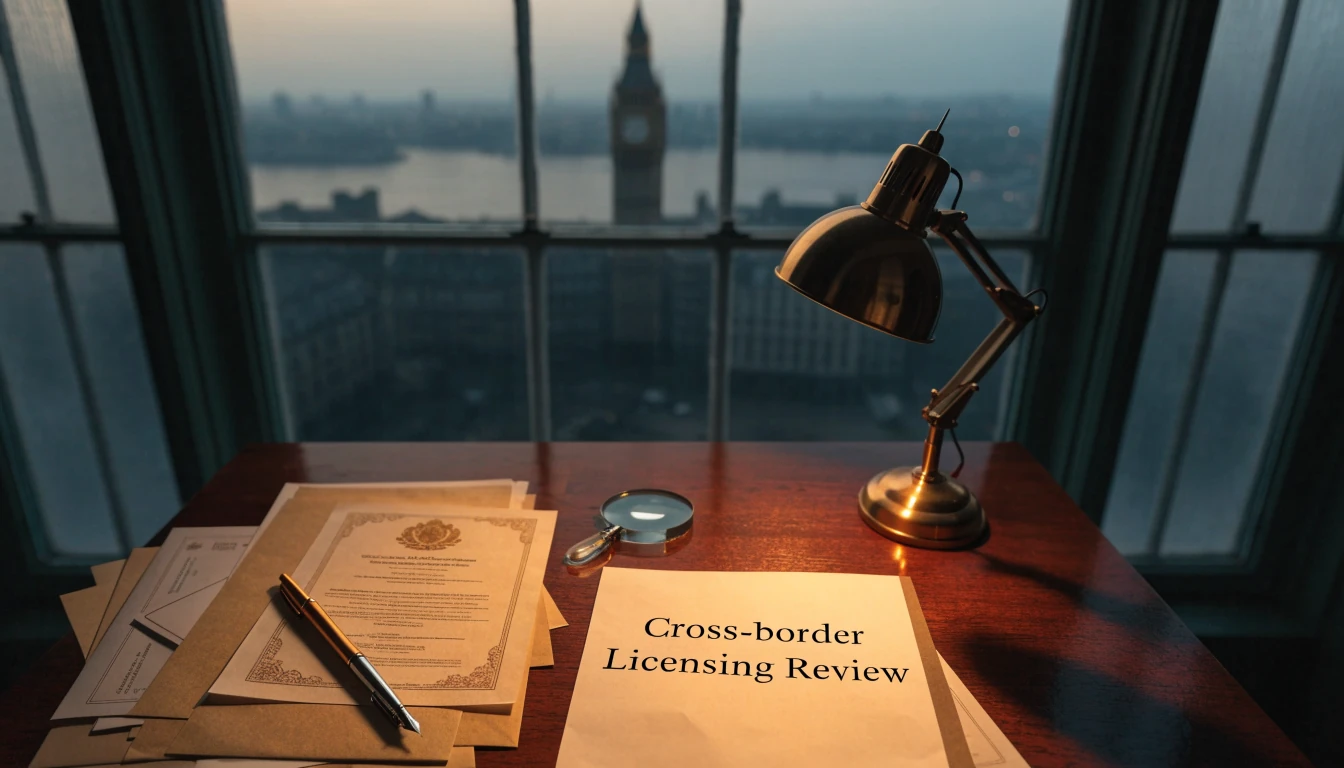
The label identifies a claimed licensing connection, but does not establish the operator’s status, oversight or the terms it offers.
What “Anjouan Casino” Means in the UK Context
An “Anjouan casino” is generally an online gambling site whose stated licence comes from Anjouan rather than from the UK Gambling Commission. In this context, the important distinction is not the games a site offers or the country suggested by its branding. It is which regulator, if any, oversees its gambling activity.
A non-UK-regulated casino operates without oversight from the UK Gambling Commission. Such sites may hold a licence from another jurisdiction. Malta, Curaçao, Gibraltar and Anjouan are among the jurisdictions associated with licensing online gambling operators. So the phrase “Anjouan casino” describes a claimed licensing connection; it does not, by itself, tell you everything about the business behind the site or the terms it offers.
You may also see “Anjouan-licensed casino”, “casino with an Anjouan licence” or “Anjouan casino site”. These are different ways of referring to a site that says its gambling services are licensed in Anjouan. The wording alone is not proof that a particular operator holds a valid licence. It is a label to understand, not a recommendation or a quality rating.
What the label does—and does not—tell you
Anjouan is one of several jurisdictions that may license online casinos. The same broad category includes sites licensed in places such as Malta, Curaçao and Gibraltar. These licences are not all UK Gambling Commission licences, and a reference to one of them should not be mistaken for UKGC oversight.
Best Casino App in the UK: Licensing and Mobile Play
The term “non-UK-regulated” is useful because it focuses on the oversight that is absent: UK Gambling Commission supervision. It does not mean that every site in this category has the same licensing arrangement, or that every operator is alike. A site may describe itself as licensed abroad, but its location, name or presentation does not establish which regulator oversees it. Nor does the word “licensed” on a page, standing alone, explain the practical scope of that licence.
That distinction matters when you read descriptions of Anjouan online casinos. Marketing language may put the licence alongside a casino’s name, games or payment options, making the label seem like a general endorsement. It should be read more narrowly: it identifies the jurisdiction the operator says is responsible for its licence. Other questions about the licence and the operator are separate.
Anjouan among other licensing jurisdictions
A casino with an Anjouan licence belongs to a wider group of online gambling sites that are regulated outside the UKGC system. Malta, Curaçao and Gibraltar are also jurisdictions that may license such operators. Naming these places gives useful context, but it does not mean their licensing arrangements are interchangeable or that a licence from any one of them amounts to UK regulation.
Non-UKGC Licensed Casinos: Licences and Risks
This is why “Anjouan casino” can be an ambiguous shorthand. It may refer to the jurisdiction named in a casino’s licensing claim, while leaving the operator’s own identity and the details of its status unclear. The phrase does not describe a particular type of game, nor does it tell you that the site is suitable for you. A casino’s use of the label should not be treated as a substitute for identifying who operates it and what its licensing claim actually covers.
Searches for new Anjouan casinos or Anjouan crypto casinos use the same jurisdictional label, even when the emphasis is on a site’s launch or the payment methods it advertises. Those features do not change what the licensing term means. A newly promoted site is not necessarily a different class of licence holder, and a reference to cryptocurrency does not turn the licence into UKGC regulation.
Treat “best” as a separate claim
Descriptions such as “best Anjouan casinos” go beyond identifying a licence jurisdiction: they suggest a ranking or recommendation. The words “Anjouan-licensed” alone cannot support that judgement. They do not establish that one casino is better than another, or that a site’s own description has been independently confirmed.
For a reader trying to understand the terminology, the safest starting point is to separate three things: the casino brand shown to customers, the operator behind the site and the jurisdiction named in its licensing claim. They are related, but the label does not make them identical. “Anjouan casino” tells you what licensing connection is being presented; it does not, on its own, settle the operator’s identity or the reliability of the claim.
Understanding Anjouan Casinos
- An Anjouan casino is licensed in Anjouan, not by the UK Gambling Commission.
- The label refers to the claimed licensing jurisdiction, not a quality rating.
- “Non-UK-regulated” means the site lacks UKGC oversight.
- A foreign licence is not a substitute for UK regulation.
That is the meaning of the phrase in the UK context: an online casino presented as licensed in Anjouan, and operating outside UK Gambling Commission oversight. Keeping that definition precise helps prevent a foreign licence label from being confused with UK regulation, while leaving the questions of legal position, licence conditions and player protections for separate consideration.
Recommended online casinos
- x3betBonus: Welcome Pack 100% Up to £1.000 + 200 Free Spins · Payout speed: 1-3 business days
- NightWinBonus: £900 + 400 free spins · Payout speed: 1-3 business days
- WinBeastBonus: €5000 + 500 FS + €650 Freebet · Payout speed: 1-3 business days
- DieselwinBonus: Welcome Pack 250% up to £4000 + 200 FS · Payout speed: 1-3 business days
- ChanzeBonus: Slots Welcome Bonus #1 200% up to €500 · Payout speed: 1-3 business days
- Revery PlayBonus: 100% up to€1,000+ 100 FS · Payout speed: 1-3 business days
What UK Law Says About Using an Anjouan-Licensed Casino
The key legal distinction is between the company supplying gambling and the person who places a bet. Under the Gambling Act 2005, the focus is on operators providing gambling services to people in the British market. A casino’s location does not remove that obligation: an operator serving customers in Great Britain must hold a licence from the UK Gambling Commission.
That rule applies whether the operator is based in Britain or elsewhere. Anjouan authorisation is not a substitute for the UK licence required to serve Great Britain. So if a site is licensed in Anjouan but offers gambling to customers in England, Scotland or Wales, the question for the operator is whether it also has the relevant UK Gambling Commission licence. The foreign licence alone does not meet that requirement.
This is an obligation placed on the business, not a rule that makes the player criminally liable for using the site. The Gambling Act targets operators supplying gambling services into the UK market; it does not make an individual’s use of an unlicensed site a criminal offence. British law also does not expressly bar citizens from using gambling services that are licensed in another country. Those points should not be confused with permission for an operator to serve Great Britain without the required UK licence.
Casino Without a Swedish Licence: UK Rules Explained
Operator responsibility and player position
The distinction can be easy to miss because the same transaction involves both a player and a gambling business. A person may be able to access a non-UK regulated casino, but access does not establish that the operator is authorised to provide its service in Great Britain. The licensing requirement concerns the business’s activity in the market, even when the company operates from abroad or holds a licence issued elsewhere.
For a player considering an Anjouan casino, this means two different legal questions should be kept separate. One is whether the operator has the permission required to serve customers in Great Britain. The other is whether the individual player commits an offence by gambling on a site that lacks that permission.
That distinction is about criminal liability, not a declaration that every service available online is lawful or authorised for the British market. Online gambling in the UK is legal at licensed and regulated sites. A player’s lack of criminal liability does not turn an operator’s unlicensed provision into a licensed service, nor does it mean that an Anjouan authorisation gives a casino permission to serve Great Britain.
What the Anjouan name does—and does not—settle
Seeing an Anjouan licence claim tells you that the operator is presenting itself as licensed in that jurisdiction. It does not, by itself, answer whether the operator holds the separate UK Gambling Commission licence required for service to Great Britain. The two questions concern different permissions. Anjouan licensing cannot be treated as automatic authorisation for the British market.
This matters when a site’s terms or marketing describe it as available to UK customers. Availability alone is not proof that the operator has the UK licence required to serve Great Britain. Equally, the fact that a player can reach a site does not mean the player has committed a crime. The legal responsibility and the player’s personal position are not interchangeable.
Legal Obligation
An operator serving customers in Great Britain must hold a licence from the UK Gambling Commission; an Anjouan authorisation is not a substitute for this requirement.
The Gambling Act 2005 governs gambling in England, Wales and Scotland, but not Northern Ireland. The requirement described here concerns operators serving Great Britain. It should not be stretched into a claim about every part of the UK having identical rules under that Act. If you are in Northern Ireland, the legal framework is distinct; the Great Britain licensing rule should not be presented as a complete account of the law there.
In practical terms, an Anjouan casino licence and a UK Gambling Commission licence answer different questions. The former does not, on its own, satisfy the British market requirement. The latter is the licence an operator needs when supplying gambling services to customers in Great Britain. Meanwhile, the fact that a player using an unlicensed site does not commit a criminal offence does not make the operator’s position equivalent to that of a UK-licensed casino.
Keep those points apart when interpreting claims about an Anjouan online casino. A foreign licence is not proof of permission to serve Great Britain, and a player’s lack of criminal liability is not proof that the operator is authorised. UK law places the relevant market-facing licensing duty on the business, while treating the individual player’s use of an unlicensed site differently.
How Anjouan Licensing Differs From UK Regulation
An Anjouan casino licence and a UK Gambling Commission licence do not grant the same market permission. Anjouan’s authorisation relates to the jurisdiction that issued it; it does not allow an operator to offer gambling in the United Kingdom or in other markets where its licence is not accepted. A casino displaying an Anjouan gaming licence should therefore not be treated as a UK-regulated service.
For operators serving customers in Great Britain, the relevant permission is a UK Gambling Commission licence, whatever country the business is based in. That distinction matters in practice: an Anjouan-licensed site operates outside the UKGC regulatory system, while a UK-licensed casino must meet the requirements attached to its British operating licence. A foreign licence is not a substitute for that permission.
The difference is not simply which regulator’s name appears on a website. A licence has a defined scope, and an operator must follow the rules that apply to the markets it serves. Anjouan authorisation does not extend automatically to Britain just because the site can be reached by a person there. Nor does a casino become UK-regulated by accepting customers, displaying sterling, or offering familiar games. Those features do not change the authority under which it operates.
This also affects how much control a player can expect over the service. UK-regulated operators work within a domestic licensing system. Anjouan-licensed offshore casinos do not fall under that system, so the UKGC’s regulatory requirements for British-facing operators do not apply to them on the basis of their Anjouan licence. If a site presents itself as available internationally, that wording does not establish that it is authorised in every country where someone can access it.
An Anjouan-licensed site operates outside the UKGC regulatory system, meaning the UKGC’s requirements for British-facing operators do not apply to them based on their Anjouan licence.
The practical terms of using a non-UK-regulated casino can differ as well. Such operators may set more flexible deposit and withdrawal policies, with fewer restrictions and the possibility of faster payouts. That flexibility should not be read as a promise that every payment will be processed quickly. Published accounts of withdrawal timing conflict: some describe payments arriving within a period ranging from 24 hours to 5 business days, while others say a withdrawal may take three or four weeks. With no UK regulatory clock governing the operator, the timing a player experiences can be difficult to predict or enforce.
A specialist review has also reported that some non-UK-regulated casinos set daily, weekly or monthly withdrawal caps, which can mean receiving a large win in instalments. This is not a condition to assume applies to every Anjouan-licensed casino. It is a reason to look closely at the particular site’s stated terms rather than relying on the general reputation of a licence or on a headline description of flexible payouts.
For a player comparing services, the central distinction is who regulates the operator in the market being served. A UKGC licence places a British-facing operator within UK regulation; an Anjouan licence does not. The two authorisations should not be treated as interchangeable labels, and the presence of one does not establish the presence of the other.
A casino may describe itself as licensed, but the useful question is what that licence authorises and where. An Anjouan casino licence is not permission to operate in Britain, and its existence does not show that a site meets the conditions imposed on UK-licensed services. Keep those points separate when assessing what a site offers: the licence jurisdiction identifies the operator’s stated regulatory basis, while the market rules determine whether that basis permits it to serve customers there.
What the Anjouan Gaming Licence Requires—and What It Leaves Open
An Anjouan gaming licence sets out a limited set of requirements for operators. One stated obligation concerns complaints: an operator must respond within 30 calendar days. That is a deadline for a response, not a stated promise that the complaint will be resolved in the player’s favour or that the operator must reach a particular outcome.
The distinction matters when reading a casino’s claims about being licensed. A requirement to reply gives a player a point of reference for when to expect an answer, but it does not by itself explain what happens if the answer is unsatisfactory. Nor does it mean the regulator will review the complaint. Anjouan’s authority does not handle, mediate or adjudicate player complaints, so the response obligation should not be mistaken for an authority-run resolution process.
The framework also does not require operators to have random number generator (RNG) testing. RNG systems are used to produce game outcomes; without a mandated testing requirement, the licence framework does not establish that an operator’s games have undergone independent checks under that rule. This does not prove that a particular casino has never tested its games. It means the licence itself does not make such testing compulsory.
Audits are likewise not mandated by the framework. A licence therefore does not, on its own, establish that an operator’s accounts or operations are subject to a required audit. If a casino makes claims about checks or certifications, those claims need to be considered separately from the requirements of its Anjouan licence.
There is also no requirement under the framework to segregate player funds from the operator’s own money. The licence does not require funds to be held separately through that safeguard. That is a feature of the framework, rather than evidence about how a particular operator chooses to manage its accounts in practice.
Do
- Expect a response to complaints within 30 calendar days.
- Verify claims about audits or RNG testing separately.
- Check if the operator chooses to segregate funds.
Don’t
- Assume a response guarantee means a favourable resolution.
- Assume the licence mandates RNG testing or audits.
- Assume the licence requires player funds to be segregated.
These distinctions help keep a licensing claim in proportion. A casino may hold an Anjouan licence, but the licence’s stated complaint-response rule should not be read as a guarantee of resolution, and the absence of mandated testing, audits or segregated funds should not be filled in by assumption. The framework establishes what it requires; it does not confirm that every operator follows additional practices it may advertise.
When an operator describes its procedures, separate those statements from the licence conditions. A claim that games are tested, accounts are audited or funds are kept apart is not established simply by the presence of an Anjouan gaming licence. Likewise, a commitment to answer a complaint within the required period is narrower than a commitment to settle it. Knowing which protections arise from the framework—and which are not required by it—makes the licence easier to interpret without treating it as broader assurance than it provides.
Payments and Withdrawals at Anjouan Online Casinos
An Anjouan casino may offer several ways to fund an account, but the payment menu can depend on the operator and the processor it uses. Offshore sites may accept credit cards, e-wallets, bank transfers and cryptocurrency, sometimes through alternative payment processors. A method shown at the deposit stage should not be taken as confirmation that you can withdraw through it later.
Before paying in, read the cashier’s rules for both directions of travel. Check which withdrawal methods are available, whether the casino requires you to use a particular route, and what documents or account checks may be needed. Keep a record of the method you used and any confirmation shown on screen. If the cashier’s information is unclear, ask the operator to explain the withdrawal process before depositing rather than relying on an assumption.
A specialist review has also reported deposits charged to a mobile phone bill or taken from a prepaid balance. Treat that as a possibility reported for some sites, not as a standard feature of Anjouan casinos. Availability can vary, and the existence of a deposit option does not establish that it can be used to receive a payout.
Published withdrawal estimates do not fully agree. One account describes withdrawals at casinos not on GamStop as taking from 24 hours to five business days, depending on the payment method. Other descriptions warn that a payout may take three or four weeks. These estimates should not be combined into a promise: the time can depend on the operator’s process, the route selected and whether further checks are requested. Unlike a simple deposit, a withdrawal may require the casino to review the account before releasing funds.
For a large balance, also check whether the operator sets daily, weekly or monthly withdrawal limits. A specialist review has reported such limits at some non-UK-regulated casinos, which could mean a larger win is paid in instalments. This is not a feature to assume will apply everywhere; check the specific cashier rules and terms before you commit money.
If a payment is pending, save the transaction reference and any messages from the operator. The practical question is not only how quickly you can deposit, but whether the stated withdrawal route and timing are clear before you start.
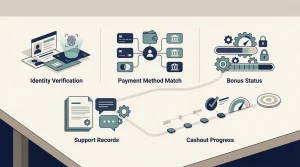
Payment Safety Check
- Review the cashier’s rules for both deposits and withdrawals.
- Confirm available withdrawal methods and required documents.
- Check for daily, weekly, or monthly withdrawal limits.
- Note the estimated payout timing for your chosen method.
- Save transaction references for all pending payments.
What an Anjouan Casino Licence Does Not Guarantee
An Anjouan casino licence is not permission to serve customers everywhere. It does not authorise an operator to run gambling services in the United Kingdom or in other markets where its licence is not recognised. A casino may display the licence prominently, but that does not establish that it is entitled to accept customers in every country. The licence’s scope and the operator’s own terms matter; its presence should not be read as universal approval.
It also does not mean that a casino must connect to GAMSTOP. Anjouan-licensed sites are not required to take part in the UK self-exclusion scheme, so registering with GAMSTOP does not block access to them. If you rely on self-exclusion to avoid gambling, do not assume that this licence brings the same barriers as a UK-regulated service.
The same distinction applies to dispute resolution. An Anjouan-licensed casino is not required to offer an independent alternative dispute resolution process comparable to one approved by the UK Gambling Commission. If you disagree with a decision about your account or a withdrawal, you may not have access to that kind of independent route through the licence. A reference to Anjouan on a website does not, by itself, tell you how a complaint will be handled.
Nor does the licence guarantee that your balance is kept separate from the operator’s own money. If the company fails, players may be treated as unsecured creditors rather than having a protected claim to funds held separately for them. That can leave you exposed to the operator’s financial position, even if the site’s licensing claim is genuine.
These limits are distinct: market permission, access to self-exclusion, independent dispute resolution and protection of player funds are not all provided simply because a casino holds an Anjouan licence. Before depositing, consider what each gap could mean for you if the operator refuses access, a disagreement cannot be resolved, or the business fails. Do not treat the licence logo as a substitute for checking the specific protections the operator actually offers.
How to Assess Claims About an Anjouan Casino List
A list of casinos described as Anjouan-licensed is a starting point for checking a claim, not an endorsement. A listing may be outdated, may repeat information supplied by an operator, or may use a brand name that does not match the company named on the licence. Treat each entry as something to verify before relying on it.
Look for the casino’s exact operating company and compare it with the public Anjouan licence entry. A similar name is not enough: the entity shown on the register should correspond to the company identified in the casino’s terms or licensing information. If the operator does not clearly identify that company, or the names do not match, the licence claim is difficult to confirm.
Check the entry’s status and expiry date as well. A licence reference displayed on a casino’s website does not by itself establish that the entry is current. Confirm the details against the public register, and do not assume that an old listing has been updated simply because the site still appears online. If the register entry cannot be found or its status is unclear, avoid treating the claim as verified.
It is also worth separating the existence of a licence from what the framework requires. Anjouan’s rules do not mandate random number generator testing, audits or the segregation of player funds. So even a matching, current entry should not be read as proof that games have undergone independent testing or that customer balances are held separately.
Verifying a Licence
Identify the operator
Find the exact operating company name in the casino’s terms or licensing section.
Check the register
Compare the company name against the public Anjouan licence entry to ensure they match exactly.
Verify status
Confirm that the licence entry is current and check the expiry date on the public register.
When checking an Anjouan casino list, note when it was last updated and whether it links to the authority’s public register rather than only to the casino. A list that gives no company names, expiry details or way to check its claims offers little basis for relying on it. Do not let a confident label substitute for checking the underlying record yourself.
These checks can establish whether a particular licensing claim appears to match a public entry; they do not turn a directory into a recommendation. If any key detail is missing or inconsistent, pause rather than filling the gaps with assumptions.
Read Anjouan Casino Bonus Terms Before You Opt In
A headline bonus can look more valuable than it is once its conditions are applied. For Anjouan casino bonuses, read the offer terms before accepting: they determine which funds must be wagered, which games count and what happens to winnings if you do not meet the rules.
Wagering requirements may apply to the bonus alone, or to the bonus and your deposit together. Specialist reviews have reported offers with a 40x requirement applied in different ways, including to the bonus and deposit combined, to the bonus only, or to bonus funds and free spins together. The wording of the individual offer matters: the same multiplier can require very different amounts of play depending on what it covers.
The same reviews have reported offshore welcome offers with wagering requirements of 35x or more. Treat that as an indication of terms you may encounter, not a standard that applies to every casino or promotion. Check the casino’s own rules for the offer you are considering, and look for whether the requirement is attached to the bonus, the deposit, or both. Also check whether particular games contribute differently or are excluded.
Free spins have their own conditions. Specialist reviews have reported requirements of 30–50 times the winnings, alongside withdrawal caps of £5–£50. These figures are not universal terms; the offer’s rules determine what applies. Check whether the stated requirement is calculated on winnings from the spins and whether a cap limits the amount you can ultimately withdraw. A large-looking spin package may therefore produce winnings that remain restricted by both wagering and cash-out conditions.
Before opting in, read the full promotion rules rather than relying on the banner or summary. Confirm when the offer starts, which games qualify, how long you have to meet the requirement, and whether accepting it changes any other bonus eligibility. These details can affect whether you can use the promotion as intended. If a condition is unclear, ask the operator to explain it before you accept, and keep a copy of the terms shown at that time.
A bonus is not the same as withdrawable cash. Judge the offer by its conditions, not its headline value.
What Anjouan Casino Reviews Should Examine
A useful review of an Anjouan casino should explain what happens when a complaint is not resolved by customer support. A polished website or a quick reply to a routine question tells you little about how the operator handles a disputed balance, a closed account or a withdrawal that has stalled. Look for a clear account of the steps available to a player, and whether the review distinguishes the casino’s own complaints process from independent oversight.
Attention The Anjouan authority does not handle, mediate, or adjudicate player complaints, and these casinos do not offer an independent dispute route comparable to UKGC-approved services.
That distinction matters. The Anjouan authority does not take up player complaints, mediate between a customer and an operator, or decide who is right. An Anjouan-licensed casino also does not offer an independent dispute route comparable to the alternative dispute resolution services approved for UK-licensed operators. If a review describes an unresolved case, check whether it says what response the player received and what happened next, rather than implying that the regulator can intervene.
Reviews should also treat identity checks as a practical issue, not a minor inconvenience. Verification may arise during a withdrawal, and the process can involve more than uploading standard documents. A specialist review has reported cases in which operators asked for notarised documents or a video call. That is a reported possibility, not a standard requirement for every casino. A careful review should say where such a claim comes from and avoid presenting it as a universal practice.
Before relying on a review, check whether it describes the evidence behind its conclusions. Does it identify the relevant complaint, explain the operator’s response, and separate what is documented from what is alleged? Does it say whether the customer had a route beyond contacting the casino? If the review simply labels support “good” or “bad” without explaining the basis, it offers little help when you need to judge how a real dispute might unfold.
Pay particular attention to the wording around outcomes. A casino resolving one complaint does not establish that every future complaint will be handled the same way. Equally, an account of a difficult verification request should not be treated as proof that all customers will face it. Reviews are most useful when they show the limits of what they can establish, so you can weigh the available evidence without mistaking a reviewer’s assessment for an independent ruling.
Before You Choose an Anjouan Casino, Consider the Safeguards
A casino’s licence is only one part of the decision. Before you compare Anjouan-licensed sites, consider what support and consumer protections would be available if gambling stopped feeling manageable or a problem arose.
Online Casino Malta MGA Licence for UK Players
Casinos not on GamStop are outside the UK Gambling Commission’s self-exclusion scheme. If you have registered with GamStop, do not assume it will prevent you from accessing a non UK regulated casino. That gap matters particularly if you rely on self-exclusion to create distance from gambling. A site may offer its own tools, but their availability and operation are not the same as being included in GamStop. Check what controls are actually offered before opening an account, and do not treat a promise on a homepage as a substitute for understanding the terms.
Responsible-gambling and data-protection rules may be less stringent at a non UK regulated casino than at a UKGC-licensed operator. The practical difference can affect how readily you can set boundaries or raise concerns about the handling of your information. Look for clear explanations of account controls and privacy practices. If those details are difficult to find or understand, take that uncertainty seriously rather than assuming the safeguards match those you would receive from a UK-regulated service.
There is also a difference in where you can turn for help. When you play at an offshore casino, you forfeit access to the UK’s Financial Ombudsman Service and to mandatory responsible-gambling tools. If a dispute arises, you should not expect UK-facing routes to resolve it. Consider whether you would be comfortable with the available support if the operator’s response did not satisfy you.
A careful comparison should therefore look beyond game choice or promotional claims. Ask yourself whether you can control or stop your gambling without relying on a system that does not cover the site, and whether you understand the limits of the support on offer. If you are already using self-exclusion or need firm safeguards, a casino outside that scheme may not fit your needs.
You remain responsible for checking the laws that apply to you and understanding the implications of using an offshore gambling service. If you cannot confirm what protections and support are available, pausing is a reasonable choice.
Why do some online casinos choose an Anjouan licence over a UKGC or Malta licence?
An Anjouan licence places a casino outside UK Gambling Commission oversight, and offshore sites may have more lenient policies. But an Anjouan licence does not replace the UKGC licence required to serve customers in Great Britain.
Is it legal for a UK player to gamble at an Anjouan-licensed casino?
Yes, UK law does not explicitly prohibit players from using gambling services licensed abroad, and players do not commit a criminal offence by using an unlicensed site. However, an Anjouan licence does not authorise an operator to serve customers in Great Britain without a UKGC licence.
What payment methods work best at non-UK-regulated casino sites?
Offshore casinos may accept credit cards, e-wallets, bank transfers and cryptocurrencies, sometimes through alternative processors. Some also allow deposits via a mobile phone bill or prepaid balance; available methods vary by site.
What are non-UK-regulated casinos?
They are online gambling sites that operate without oversight from the UK Gambling Commission. They may be licensed in jurisdictions such as Malta, Curaçao, Gibraltar or Anjouan.
Material created by the team SlotMonster